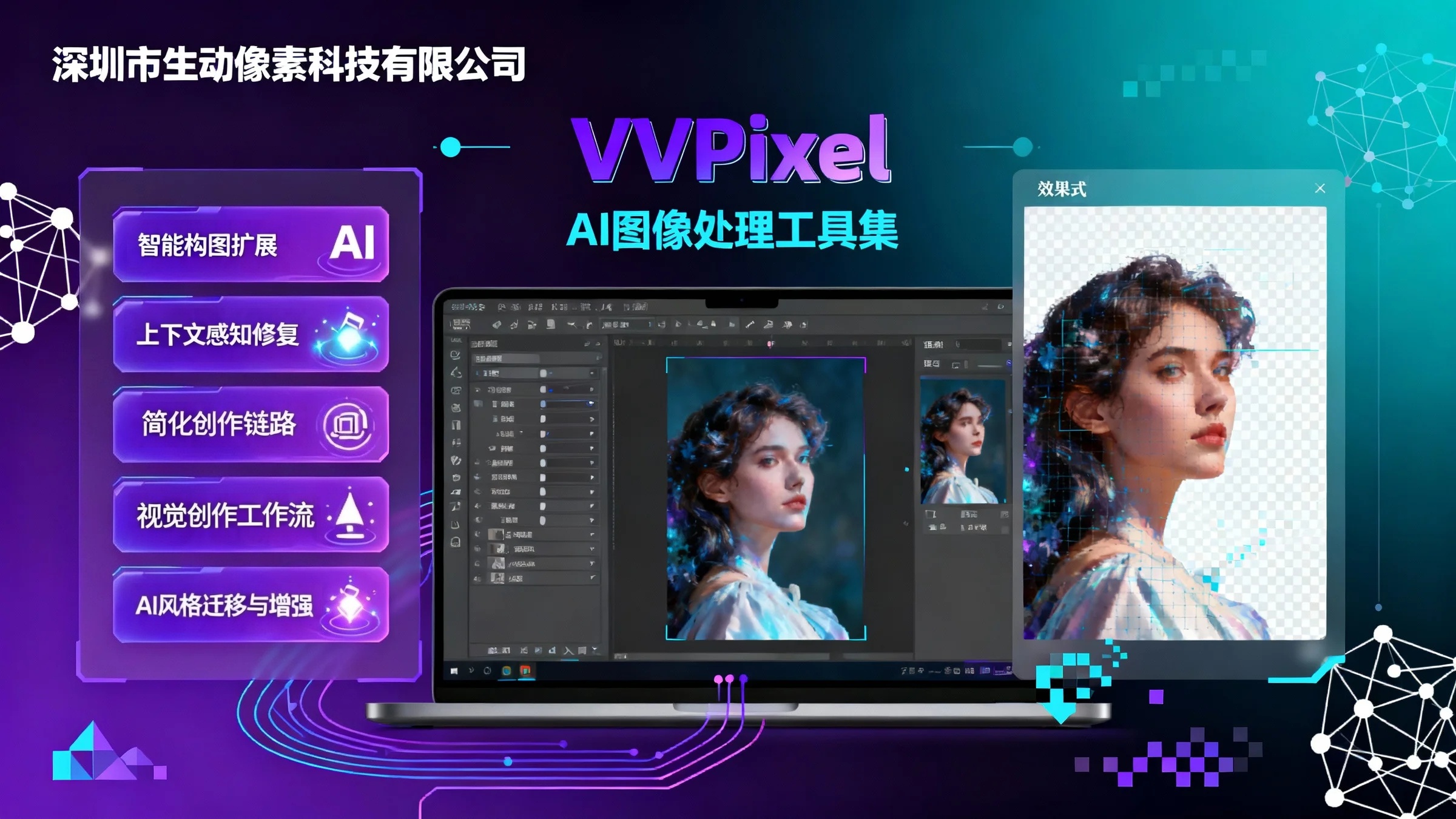
As Extended Reality (XR) technology, including augmented reality (AR) and virtual reality (VR), moves from concept to large-scale application, its core foundation - real-time generation, processing, and interaction of visual content - is facing unprecedented technological challenges and opportunities. As a professional software provider specializing in image processing and visual creation, Shenzhen Vivid Pixel Technology Co., Ltd. is actively laying out its core product VVPixel technology accumulation as the cornerstone, exploring innovative application paths in the emerging field of XR.
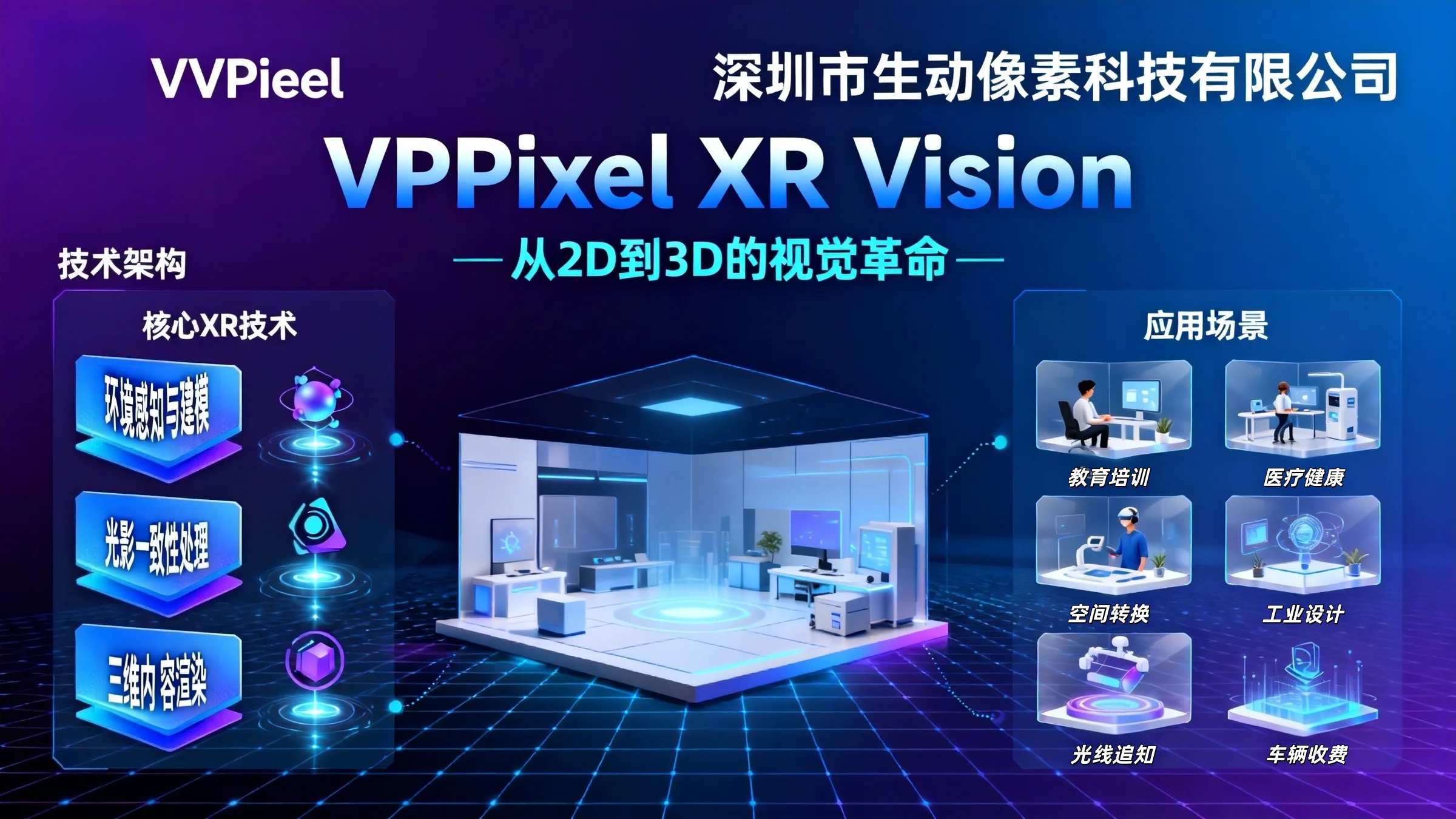
The immersion and interactivity of XR experience have posed disruptive demands on traditional image processing techniques. This is no longer just about optimizing static image quality, but about achieving real-time, high-quality, and low latency visual content generation and synthesis in three-dimensional space and dynamic environments. Specific challenges include: environmental understanding and real-time modeling, where devices need to perceive and understand complex physical environments in real time, and construct digital scenes that can be used for virtual real fusion; Consistency processing of light and shadow ensures that virtual objects have correct projection, reflection, and color fusion under real environmental lighting; And efficient rendering and compression transmission of 3D content, achieving high fidelity visual experience with limited terminal computing power and bandwidth. These requirements collectively point to a core: visual technology needs to shift from "post-processing" to "real-time perception and generation".
Faced with the strict requirements in the XR field, Vivid Pixel Technology is systematically building relevant technical capabilities based on VVPixel's profound accumulation in the field of 2D image AI processing. At the level of environmental perception, the company is developing lightweight neural network models suitable for mobile and edge devices for real-time scene segmentation, depth estimation, and spatial anchor recognition. At the level of virtual real fusion, utilizing the technological advantages in image style transfer, light and shadow simulation, and super-resolution reconstruction, we are committed to solving the problem of seamless integration of virtual objects with environmental lighting and texture. At the content production pipeline level, the plan is to extend VVPixel's toolchain to the 3D asset creation and optimization process, such as using AI to quickly convert 2D images or sketches into lightweight 3D models, or automating surface reduction and texture optimization for high modulus assets to adapt to the performance constraints of the XR platform.
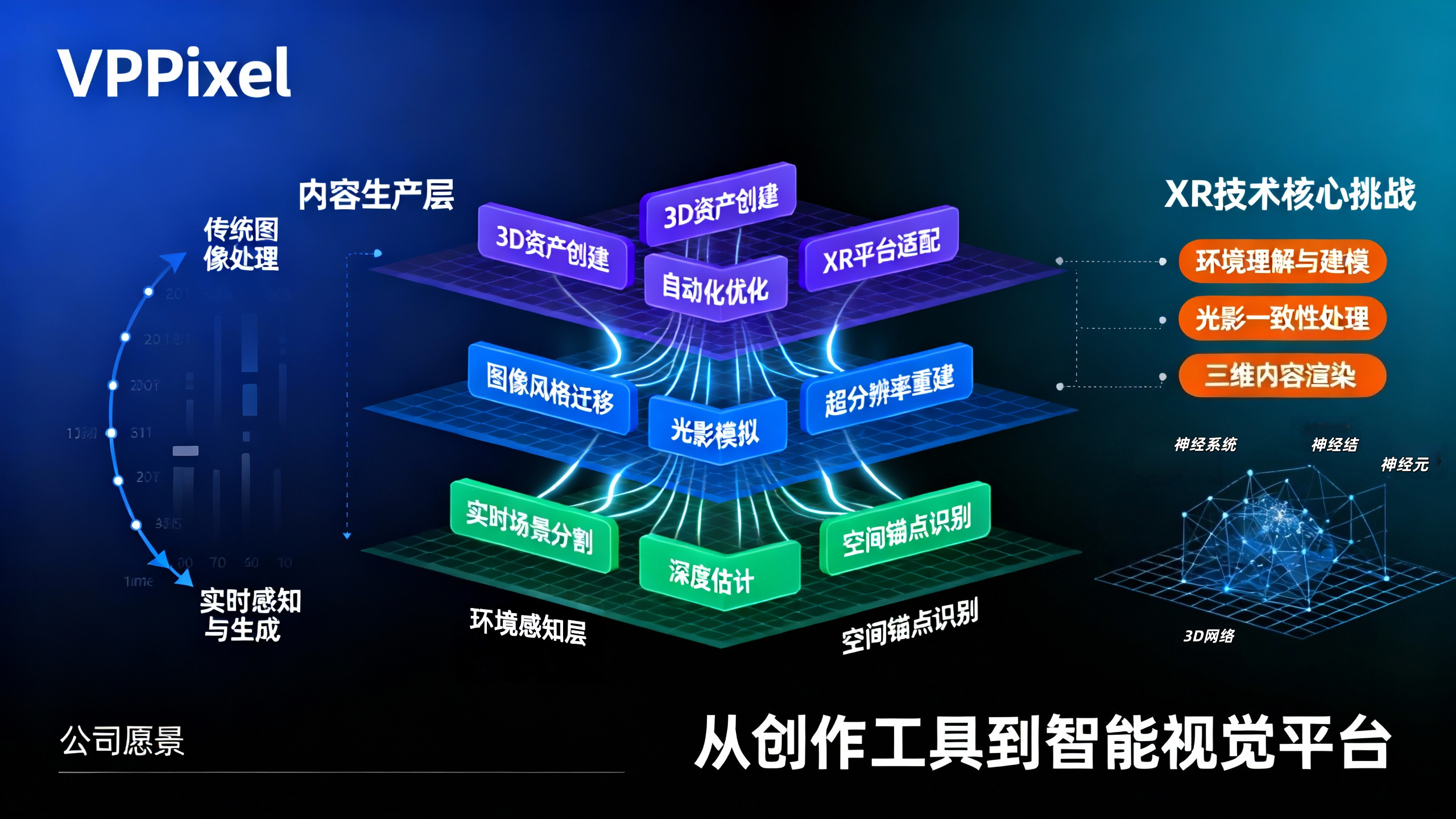
Looking ahead, Vivid Pixel Technology believes that the evolution of visual technology will deeply integrate into the spatial computing paradigm. The long-term vision of VVPixel is to evolve from a powerful creative tool to an intelligent visual platform that supports the creation and distribution of next-generation visual content. This platform will deeply integrate AI and computer graphics, empowering creators to efficiently produce immersive content adapted to XR environments, and providing developers with efficient visual processing and fusion engines. The company will continue to invest in research and development, working closely with hardware partners, content developers, and industry application providers to push visual technology beyond boundaries, allowing everyone to create and experience an unprecedented visual world more freely and conveniently.